
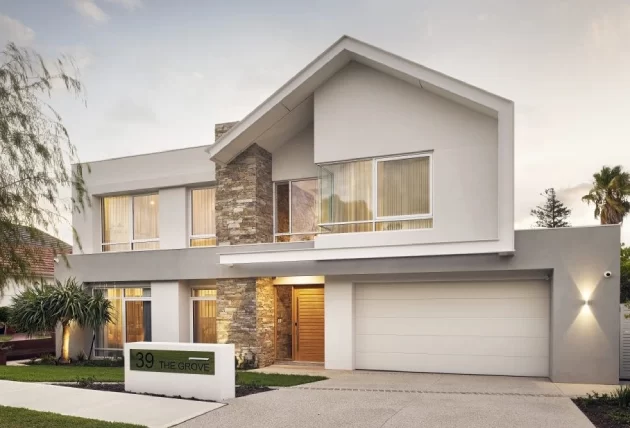
Drive through any Sydney suburb on a Saturday morning and you’ll spot it — the “before and after” street. One house looking like it just stepped out of a renovation show, the one next door still rocking exposed brick that’s seen better decades. Nine times out of ten, the difference isn’t a new roof or a fresh letterbox. It’s the render.
Cement rendering has quietly become one of the most talked-about (and most misunderstood) home improvement jobs in Sydney. Everyone’s got an opinion on it — your brother-in-law reckons he could “probably do it himself with a trowel and a weekend,” your neighbour swears her acrylic finish hasn’t budged in eight years, and somewhere on Facebook Marketplace there’s a bloke offering to “render your whole house for cash, mate, no worries.” We’re going to save you from all three of those conversations.
This is the guide we wish more people read before they picked up the phone — what rendering actually is, why Sydney homes need it more than most, what the process really looks like, and how to tell a proper job from a patch-up that’ll crack by Christmas.
So What Exactly Is Cement Rendering?
At its simplest, rendering is a protective and decorative layer applied over brick, block, concrete or fibre cement sheeting. Think of it as a coat of armour with a killer sense of style. A tradie mixes cement, sand, lime and water into a workable paste, applies it in coats, and finishes it smooth, textured or patterned depending on the look you’re after.
But here’s the bit most blogs skip over: rendering isn’t one product, it’s a whole family of finishes, and picking the wrong one for your property is how homeowners end up with cracking, bubbling or that dreaded “why does my wall look like a scone” texture. If you want the full technical rundown on mixes, coats and curing times, our cement rendering page goes deep on the process — but here’s the short version of what’s actually on offer around Sydney.
The Main Types You’ll Come Across
Traditional cement render is the OG — sand, cement, lime, applied in two or three coats. It’s tough, it’s cheap-ish, and it’s been protecting Aussie homes since your grandparents’ time. Great for solid brick homes that need serious weatherproofing.
Acrylic render is the flexible younger sibling. Pre-mixed with polymers, it resists cracking far better than straight cement, comes pre-coloured (so no repainting every few years), and handles Sydney’s swing between baking summers and soggy winters with a lot less drama. If your home has had movement issues or you’re after a low-maintenance finish, our acrylic rendering Sydney team can talk you through whether it’s the better fit.
Texture and granosite rendering is where things get artistic. Instead of a flat, smooth wall, you get depth — pebbled, stippled, sponge-finished, whatever suits the era and style of your home. Older Federation and heritage-style homes especially come alive with a proper texture rendering finish rather than a flat modern coat that looks out of place.
Polystyrene rendering and foam cladding is the insulation overachiever of the family. Lightweight polystyrene panels get fixed to the wall and rendered over the top, which means you’re not just getting a finish — you’re adding a genuine thermal barrier. For homes without cavity insulation (a lot of older Sydney stock), polystyrene rendering can noticeably take the edge off both a Bondi summer and a Blue Mountains winter.
Panel cladding rounds out the toolkit for properties needing a lightweight, modern, low-maintenance exterior — particularly popular on extensions, alfresco areas and second-storey additions where you don’t want to load up the structure with heavy wet render. Have a look through our panels and cladding options if you’re renovating rather than starting from brick.
Why Sydney Homes Specifically Need This
Here’s the thing about Sydney: our weather doesn’t do “mild.” We get UV that fades paint in a couple of summers, coastal salt air that eats into masonry from Manly to Cronulla, and enough rain in one wild week to test every gap in your brickwork. Then, just to keep things interesting, we throw in clay-heavy soils that shift with the seasons and put stress cracks through unrendered or poorly rendered walls.
Unrendered brick and block homes cop all of that directly. Water gets into mortar joints, salts leach through and cause efflorescence (that chalky white bloom you’ve probably seen on older homes), and over time the structure itself starts absorbing damage it was never built to handle. Rendering isn’t just decoration in this climate — it’s a genuine line of defence.
There’s also the value conversation, which, let’s be honest, is usually what tips people over the edge. A tired, patchy brick exterior reads as “needs work” to any buyer or agent walking through. A crisp, even render — especially paired with a modern colour — reads as “move-in ready,” and that shows up in the number on the contract. Whether you’re planning to sell in six months or sixty years, residential rendering tends to be one of the better dollar-for-dollar improvements you can make to a home’s street appeal.
What the Process Actually Looks Like (No Surprises Edition)
A lot of the anxiety around hiring a renderer comes from simply not knowing what’s supposed to happen. So here’s the honest, no-jargon rundown:
- Inspection and quote. A proper cement renderer walks the property, checks the substrate (brick, block, concrete, sheeting), notes any existing cracks or damp issues, and quotes based on square metreage and finish type — not a guess pulled out of thin air.
- Surface prep. This is the step corner-cutters skip, and it’s the one that decides whether your render lasts five years or twenty-five. Loose material gets removed, cracks get addressed, and the surface gets cleaned and, where needed, treated with a bonding agent.
- Scratch coat. The first layer goes on and gets scored (literally scratched) to give the next coat something to properly key into.
- Base/float coat. This builds thickness and levels out the surface, straightening up any wonky old brickwork in the process.
- Finish coat. The final layer, applied in whichever style you’ve chosen — smooth, textured, bagged, or a coloured acrylic topcoat.
- Curing and clean-up. Traditional cement render needs time (and sometimes a light misting) to cure properly without cracking, while the crew clears offcuts, overspray and general mess.
Most standard home exteriors take anywhere from a few days to a couple of weeks depending on size, weather and finish complexity. Anyone promising a full house render in a single afternoon is either exaggerating or about to hand you a problem with your name on it.
The Jobs People Forget Are Rendering Jobs Too
When people think “rendering,” they usually picture a house exterior. Fair enough — that’s the most visible use. But two of the most requested jobs on our books are actually inside the house.
Bathroom rendering has genuinely taken off in the last few years, especially for anyone chasing that polished, tile-free, European-style wet room look. Done properly with a waterproof, moisture-resistant render, it holds up brilliantly in high-humidity spaces and skips the endless grout lines you’d otherwise be scrubbing on a Sunday. Have a browse through our bathroom rendering work if that’s the vibe you’re chasing for a renovation.
Pool rendering is its own specialist category entirely, and it’s not a job to hand to a general painter. Pool renders need to handle constant water exposure, chemical contact and UV without pitting, staining or peeling. A smooth, properly cured pool rendering finish is the difference between a pool that looks resort-grade for a decade and one that needs re-doing every few summers.
Rendering vs Plastering — Yes, They’re Different
Quick myth-bust, because we get asked this constantly: rendering is for exterior surfaces (brick, block, concrete), while plastering is generally the internal cousin — smoothing interior walls and ceilings for paint, patching damage, or preparing surfaces after a reno. Some techniques overlap, and a genuinely skilled crew handles both, but if someone’s calling themselves a renderer and refuses to touch an internal wall (or vice versa), it’s worth asking why. Our plastering services run alongside our exterior work for exactly this reason — most renovations need both at some point.
The Real Benefits (Beyond “It Looks Nice”)
- Weatherproofing — a genuine barrier against Sydney’s rain, humidity and coastal salt air
- Insulation — particularly with polystyrene systems, helping regulate indoor temperature and potentially trim energy bills
- Damp and mould prevention — sealing out moisture before it becomes a structural (and health) issue
- Structural protection — masking and, in some cases, helping stabilise minor surface cracking
- Property value — a render refresh is consistently one of the higher-return improvements for street appeal
- Design flexibility — colours and textures that paint alone simply can’t replicate
How We Help (Without the Sales Pitch)
We’re not going to pretend every rendering job in Sydney needs a specialist — some genuinely don’t. But most do, and the honest test is this: ask three different renderers to walk your property, and see how differently they talk about prep work. That gap tells you everything.
Our crew has spent years working across Sydney’s mixed bag of housing stock — Federation homes in the Inner West that need texture matching done properly, coastal properties in the Eastern Suburbs battling salt damage, and newer builds out west needing straightforward acrylic finishes with zero fuss. We quote based on what your walls actually need, not a one-size-fits-all package, and we’ll tell you straight if your existing render just needs patching rather than a full strip-back. You can browse the full range of what we cover on our services page, or have a look through completed jobs across Sydney on our projects page to get a feel for finishes before you commit to one.
Picking the Right Cement Renderers Sydney Has to Offer
A few genuinely useful questions to ask before you sign anything:
- Are you licensed and insured for this specific work? Not “a mate with a mixer” — actual licensing.
- What’s included in surface prep? If the answer is vague, that’s your answer.
- Can I see recent local work? Sydney’s climate varies suburb to suburb — coastal jobs need different treatment than inland ones.
- What’s the warranty on the finish? A confident renderer backs their work in writing.
- What happens if you find damp or structural issues mid-job? You want a plan, not a shrug.
If you’d rather skip the guesswork entirely, that’s what a proper consultation is for — we’ll walk the property, talk through cement vs acrylic vs texture finishes honestly, and give you a quote that actually matches the job in front of us.
The Bottom Line
Rendering is one of those jobs that’s easy to underestimate until you’ve either done it brilliantly or watched it go wrong. Done properly, it protects your home from everything Sydney’s weather can throw at it, adds genuine value, and turns a tired exterior into the kind of house people slow down to look at. Done badly, it’s an expensive patch job you’ll be paying for again in a few years.
If your walls have been quietly asking for an upgrade, have a read through our blog for more detailed guides on finishes, colours and costs, or skip straight to the good bit and get in touch for a free, no-pressure quote. Your home’s already doing the hard work of keeping you dry and comfortable — it’s about time the outside looked like it too.