Address
Sydney Wide
Call for anything
You may send an email
Open 7 Days

There’s a house on your street. You know the one. Crumbling brickwork, paint peeling like sunburned skin, walls that look like they gave up sometime around 2003. Now picture the house next to it — clean, crisp, freshly rendered. Modern. The kind of finish that makes the neighbours peek over the fence.
The difference? Rendering. And not the dodgy DIY kind, mate.
Whether you’ve just bought a tired old fibro cottage in Penrith, you’re flipping a terrace in Newtown, or you’re a developer finishing off a commercial build in Parramatta — this guide is written for you. We’re going to walk you through what house rendering actually is, why Sydney homeowners are doing it in droves, how the process works from start to finish, what different types cost, and how to pick a team who won’t leave your walls looking like a bad art project.
Grab a flat white. Let’s go
Let’s start with the basics, because half the confusion in this industry comes from people not knowing what they’re actually asking for.
Cement rendering is the process of applying a cement-based mixture — typically Portland cement, sand, lime, and water — over masonry, brick, concrete block, or other wall substrates. It goes on in one or more coats, bonds to the surface, and once cured, gives you a smooth (or textured, if that’s your vibe) finish that can be painted over or left as-is.
Think of it as giving your home’s exterior a full skin transplant. Old, exposed, weathered walls get a clean new layer that’s tougher, smoother, and honestly just better-looking.
But rendering isn’t just cosmetic. That’s the part people miss.
Sydney’s climate is a bit of a mixed bag — blazing summers, coastal salt air up and down the eastern suburbs, humidity in the west, and the occasional wild storm that comes in like it has something to prove. Rendered walls act as a barrier. They lock moisture out, reduce thermal movement, and protect the underlying masonry from the kind of slow deterioration that ends with an expensive structural repair bill.
If you’ve been sitting on the fence about getting it done, here’s the truth: the cost of rendering now is almost always less than the cost of ignoring your walls for another five years.
You can browse the full range of rendering and plastering services available across Sydney to get a clear picture of what’s on the table.
Not all render is created equal, and the Sydney market offers more options than most homeowners realise. Here’s how they stack up.
Sand and cement render is the time-tested option. It’s been used on Australian homes for over a century, and there’s a reason it’s still around. Applied in two or three coats, it cures into a hard, durable finish that, when done properly, lasts decades. It’s the go-to for older brick homes, heritage properties, and anyone who wants a solid, traditional look.
The one catch? It needs to be painted once it’s cured, and because it’s a relatively rigid material, it can develop hairline cracks if there’s any movement in the substrate. That’s not necessarily a deal-breaker — it just means application quality matters enormously. You want a skilled set of hands on the trowel.
For Sydney homes, cement rendering remains one of the most popular and cost-effective ways to transform an exterior. Typical pricing sits around $30–$50 per square metre for standard cement render, though that can move depending on access, substrate condition, and the complexity of the job.
Acrylic render uses a polymer-modified mix that adds flexibility to the finished product. It handles minor wall movement better than straight cement render, which makes it particularly popular for modern builds and coastal properties where thermal expansion and contraction are more pronounced.
It comes in a huge range of colours, which means in many cases you won’t need to paint at all — the finish coat is the colour. That saves you a step and cuts long-term maintenance. Expect to pay in the $45–$60 per square metre range.
Flexible render systems take the polymer modification further, offering enhanced crack resistance for walls that are prone to movement — whether that’s from soil conditions, structural settling, or just the reality of a 1970s brick veneer that’s had a hard life. If your existing walls have a history of cracking, this is worth discussing with a professional renderer.
Want your home to look like it belongs on the pages of a design magazine? Decorative rendering and Granosite texture finishes are where things get genuinely exciting. Granosite is a textured acrylic coating that gives walls a distinctive, fine-grained finish — it’s been a staple of Australian commercial and residential construction for decades, and it holds up beautifully in harsh conditions.
Texture rendering more broadly covers anything from rough sand-finish to smooth Venetian plaster effects. It’s the difference between a house that looks nice and one that has genuine character. If you’re renovating with an eye to resale value, decorative finishes consistently impress buyers in the Sydney market.
This one surprises a lot of people. Polystyrene rendering systems involve applying expanded polystyrene (EPS) panels to the exterior of a wall, then coating them with render. The result is an excellent thermal insulation layer combined with a professional rendered finish.
It’s lightweight, it dramatically improves a home’s energy efficiency, and it works beautifully on both new builds and renovations. For homeowners tired of heating and cooling bills that make them want to cry, polystyrene rendering is worth a serious conversation. Costs typically range from $15–$25 per square metre for the render component, though the full system including EPS panels and installation will vary.


Good question — and one that most companies gloss over. Here’s what a professional rendering job actually looks like from start to finish.
Step 1: Surface Assessment and Preparation
This is the step that separates the pros from the cowboys. Before a single trowelful of mix goes on, the substrate needs to be assessed. That means checking for existing cracks, moisture issues, old paint or coatings that might affect adhesion, and the overall structural integrity of the wall.
Poor prep is the number one reason renders fail. Cracks form, sections peel, and the homeowner is left wondering what went wrong. A proper render crew will repair damaged areas, clean the surface, and — where needed — install reinforcement mesh to give the render something to grip onto.
Step 2: Scratch Coat
For most systems, the first coat is a scratch coat — a relatively thin layer applied to the substrate and then scratched (keyed) while still wet to create a mechanical bond for the subsequent coats. This coat isn’t pretty; it’s not meant to be. Its job is adhesion.
Step 3: Base Coat / Build Coat
Once the scratch coat has cured, the base coat goes on. This builds the thickness of the render system and starts to establish the final profile of the wall. Any undulations or imperfections in the substrate get addressed here.
Step 4: Finish Coat
The finish coat is where the magic happens. Depending on the system — smooth trowel, textured, Granosite, acrylic colour coat — the finish is applied and brought to the specified profile. This is the coat that determines how your home looks for the next 20 years. Attention to detail here is everything.
Step 5: Curing and Painting (if required)
Cement render needs time to cure before it can be painted. Rushing this step is another common mistake. Acrylic colour-coat systems often don’t require painting at all — the finish coat is the final product.
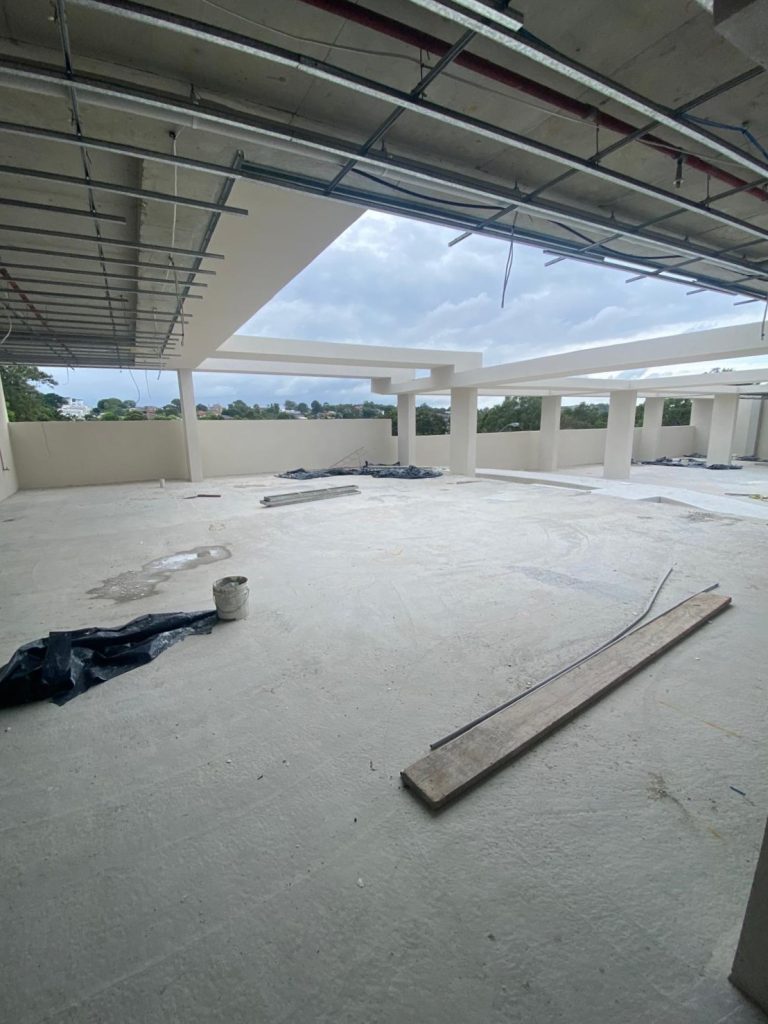
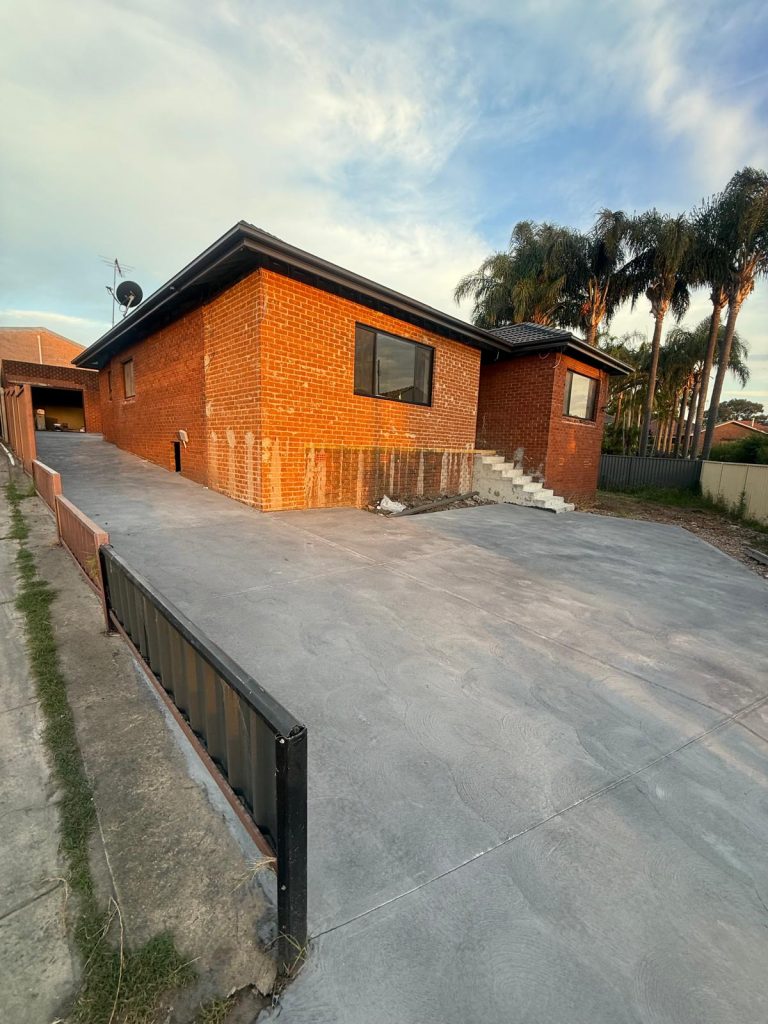
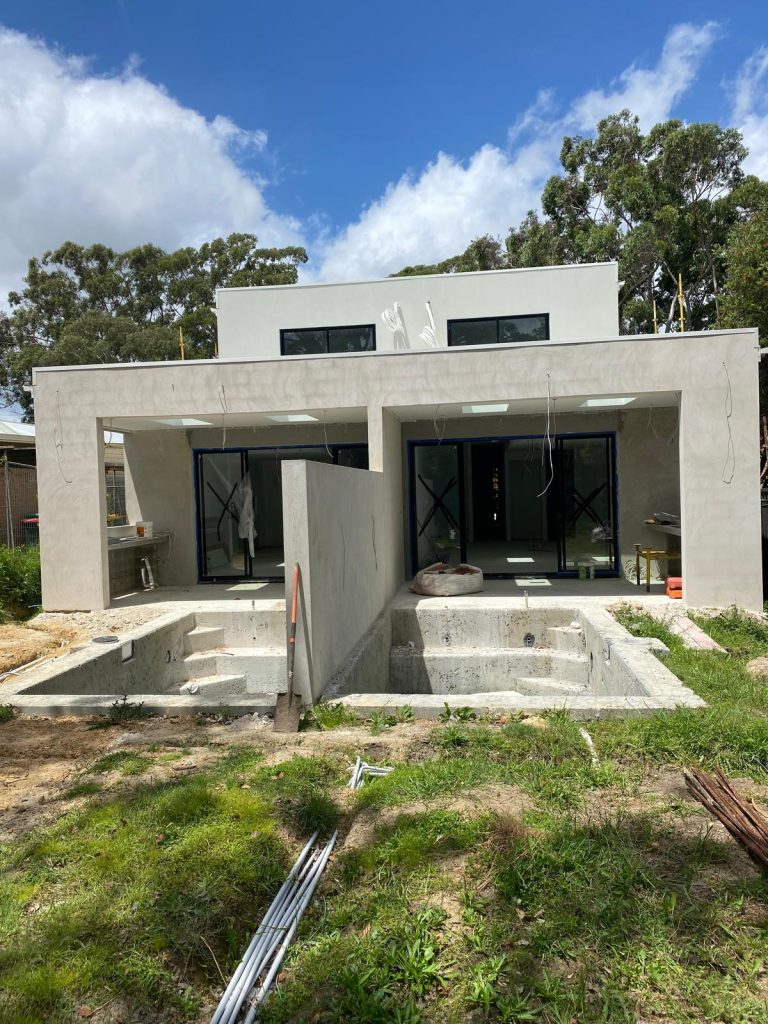
Want to see what finished projects actually look like in the real world? The completed project gallery is worth a look before you commit to a direction.
For homes — whether it’s a freestanding house, a townhouse, a duplex, or a unit block — the priorities are aesthetics, durability, and value. Residential rendering in Sydney is about transforming the way a home looks and feels, improving its weather resistance, and adding genuine value at sale.
Sydney’s property market is competitive. First impressions happen at the kerb. A freshly rendered exterior communicates care, quality, and modernity in a way that tired brickwork simply can’t.
Commercial projects bring a different set of demands. Larger surface areas, tighter deadlines, regulatory compliance, and the expectation of durability that can handle heavy foot traffic, weather, and wear are all part of the picture. Commercial rendering across Sydney requires a team that understands how to plan and execute at scale — coordinating labour, scaffolding, access, and sequencing without disrupting a business that might still be operating during the work.
Retail frontages, office buildings, industrial facilities, schools, childcare centres — the range of commercial rendering work in Sydney is broad, and each job has its own requirements.
While we’re talking about surfaces, it’d be remiss not to mention plastering. Many Sydney homeowners confuse rendering and plastering, which is understandable — they share techniques and materials, but they serve different purposes.
Rendering is primarily an exterior wall treatment applied over masonry and brick. Plastering refers to the application of a finishing compound to interior walls and ceilings — creating the smooth, paint-ready surface that’s standard in Australian homes.
If you’re renovating internally, dealing with damaged walls after a pipe leak, or building out a new extension, quality plastering services in Sydney are just as important to the final result as anything happening on the outside.
A good plasterer can turn a rough, patchy wall into something you’d actually want to hang your art on. And in older Sydney homes, where walls have seen decades of movement, settling, and enthusiastic DIY attempts, that’s genuinely valuable work.
Let’s not dance around it. Here’s a realistic breakdown based on current Sydney market pricing:
Render Type | Cost per m² (approx.) | Notes |
Cement render (2 coat) | $30 – $50 | Needs painting once cured |
Acrylic render | $45 – $60 | Often pre-coloured, lower maintenance |
Flexible render | $50 – $70 | Best for movement-prone walls |
Granosite / texture coat | $45 – $65 | Decorative finish, excellent durability |
Polystyrene render | $15 – $25 (render only) | Full system cost is higher |
For a typical single-storey Sydney home, total project costs commonly land in the $8,000–$15,000 range. Double-storey homes requiring scaffolding can run from $15,000–$25,000 or more. These are ballpark figures — a proper quote requires a site visit and assessment.
Factors that affect your final price include:
Surface condition. Walls with significant cracking, damage, or old coatings require more preparation time — and time is money.
Access. Single-storey homes are straightforward. Double-storey, narrow side access, or steeply sloped blocks require scaffolding or elevated work platforms, which add cost.
Substrate type. Brick, concrete block, hebel, and fibro each have different prep requirements and adhesion properties.
Location in Sydney. Inner-city and eastern suburbs jobs often carry a small premium due to parking, access, and logistics.
Finish type. More complex decorative finishes take longer to apply. A simple float-and-set finish costs less than a hand-applied texture treatment.
The honest advice: get three quotes, make sure they’re based on the same scope, and be wary of anything that seems suspiciously cheap. In rendering, as in most things, you tend to get what you pay for.
There’s a certain type of homeowner — and you might know one — who watches three YouTube videos and decides they can render their own house. Good on them for the enthusiasm. But rendering is a skill that takes years to develop. Mixing ratios, application technique, scratch coat adhesion, timing between coats, weather awareness — there are dozens of variables that experienced renderers manage almost unconsciously.
A bad rendering job doesn’t just look terrible. It fails. Sections hollow out and peel. Cracks propagate. Water gets behind the render and causes damage to the underlying wall. Fixing a failed render is always more expensive than doing it right the first time.
At Bill Cement Rendering, the team brings together certified tradespeople who’ve honed their craft across hundreds of residential and commercial projects across Greater Sydney. The company runs on a foundation of premium materials, proper preparation, and the kind of attention to detail that you’ll still see on the wall twenty years from now.
They’re not a call centre that dispatches whoever’s available. They’re a rendering crew that treats every project — whether it’s a two-room terrace or a multi-storey commercial building — as a reflection of their work.
Can I render over existing render? Sometimes, yes — but it depends on the condition and adhesion of the existing coat. A proper assessment is needed. Applying fresh render over failing render is a recipe for problems.
How long does rendered last? A well-applied cement render on a sound substrate can last 20–30 years with basic maintenance. Acrylic systems are similar. Regular inspection and timely repair of any cracks will significantly extend the life of the finish.
Does rendering add value to my home? Yes, consistently. In Sydney’s market, street appeal matters enormously. Freshly rendered and painted homes routinely command higher prices than comparable unrendered properties — particularly in suburbs where rendered homes are the standard.
How long does the job take? A typical single-storey residential render takes 3–7 days depending on size, substrate, and weather. Curing and painting add time on top of that. Larger or more complex projects take longer.
Can rendering be done in winter? Yes, though temperature and humidity affect curing times. Experienced renderers know how to manage these conditions. Avoid scheduling large jobs immediately before or after prolonged wet weather.
Your walls do more than hold the roof up. They’re the first thing people see, they protect your home from Sydney’s climate, and they contribute meaningfully to the value of your property. Ignoring them is a slow-burn decision that tends to get more expensive the longer it goes on.
Whether you’re looking at a full exterior overhaul with cement or acrylic rendering, want to explore decorative Granosite texture finishes, need polystyrene cladding for a renovation with thermal performance in mind, or you just need a solid plastering work done inside — there’s a solution, and it starts with talking to people who know their stuff.
Get in touch with Bill Cement Rendering for an obligation-free assessment. They service all of Greater Sydney — from the Northern Beaches to the Hills District, the Inner West to the Sutherland Shire — and they’ll tell you straight what your walls need, what it’ll cost, and how long it’ll take.
No rubbish. Just good rendering.
Bill Cement Rendering — Sydney’s residential and commercial rendering specialists. Explore our full range of services or check out our recent project work to see the quality for yourself.
Sydney Wide
0431 320 320
Bill Cement Rendering is a team of certified rendering artisans dedicated to pushing the boundaries of traditional rendering.