
If you’ve ever stood on your nature strip, squinted at your own house, and thought “yeah, that render’s seen better days,” you’re not alone. Half of Sydney is having the same conversation with themselves right now — usually right after a bit of rain has made the cracks in the brickwork a bit too obvious for comfort.
Rendering is one of those jobs that gets talked about a lot and understood properly by almost no one. People throw around “cement render,” “acrylic,” “granosite,” and “plastering” like they’re interchangeable, then wonder why their quote from one bloke is half the price of another. So let’s actually sort it out — what rendering is, why Sydney homes need it more than most, what it costs, how it’s done properly, and how you avoid ending up with a wall that looks like a bad DIY tan job.
We’ve put this guide together after years of standing in Sydney driveways and backyards having this exact conversation with homeowners, usually with a coffee in hand and a suspicious dog watching from the porch. If you’d rather skip straight to the short version, our homepage covers the essentials. But if you want the full picture before committing your hard-earned to a tradie, stick with us for the next few minutes.
Why Should You Even Bother Rendering Your House?
Short answer: because Sydney’s climate is not gentle on brick, and brick is not gentle on your resale value if it’s left bare and blotchy.
Between the salt air rolling in off the coast, the UV that could peel paint off a Kombi van, and the sudden downpours that seem to arrive uninvited every few weeks, exposed brickwork cops a hiding. Render acts as a weatherproof skin. Done properly, it stops moisture creeping into your walls, reduces the damp patches that turn into mould, and adds a genuine layer of thermal insulation — which your energy bill will thank you for come January and July alike.
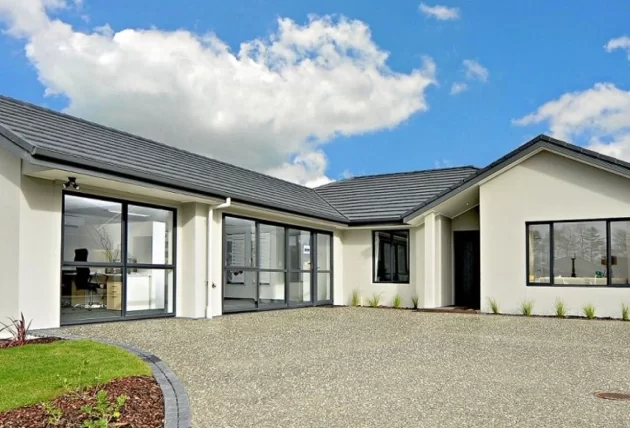
Then there’s the vanity factor, and there’s nothing wrong with admitting it matters. A freshly rendered façade is one of the few renovations that change a street’s first impression of your home overnight. Real estate agents will tell you rendering is one of the higher return-on-investment jobs you can do before a sale, right up there with a kitchen refresh, but at a fraction of the cost. Residential rendering genuinely does more heavy lifting for kerb appeal than most homeowners expect.
What Actually Happens When You Render a Wall
“Rendering” sounds simple — slap some cement mix on a wall — but the process is closer to plastering a cake than throwing paint at a fence. A proper job involves:
- Surface prep — cleaning, removing loose or crumbling old render, patching cracks, and sometimes fixing up brickwork underneath that’s been hiding problems for years.
- Bonding coat — a layer that helps the render grip the substrate, especially important on smooth or previously painted brick.
- Base coat(s) — the structural layer, usually applied in one or two passes depending on the system.
- Finish coat — this is where the look happens: smooth, sponge, textured, or a decorative acrylic finish depending on what you’ve chosen.
- Curing and, where relevant, painting — cement render usually needs a good couple of weeks to cure properly before paint goes on.
Skip a step, rush the curing, or use the wrong render for the wrong wall type, and you’ll be looking at hairline cracks within a year or two. This is genuinely a “measure twice, cut once” trade.
The Render Rundown: Which Type Actually Suits Your Wall
This is where most people get lost, so here’s the plain-English version.
Cement render is the traditional workhorse — a sand and cement mix that’s been used on Australian homes for generations. It’s cost-effective and gives that classic smooth or textured Sydney look, though it’s a bit more prone to hairline cracking with building movement and generally needs painting afterwards. If you’re after that timeless finish without breaking the bank, cement rendering is usually where the conversation starts.
Acrylic render is the more flexible, modern cousin. Because it moves with the building instead of fighting it, it’s far less likely to crack, and it comes pre-coloured, which saves you the painting job down the track. It costs more upfront but tends to work out cheaper over its lifespan once you factor in maintenance. For homes exposed to Sydney’s coastal humidity or western heat swings, acrylic rendering is often the smarter long game.
Granosite texture rendering has been knocking around Australian construction since the 1950s, and it’s stuck around for good reason. It’s a water-based acrylic system with fine aggregate that gives a distinctive speckled, self-cleaning texture — brilliant for hiding minor wall imperfections and shrugging off salt spray if you’re anywhere near the water. It also happens to be excellent at bridging over existing hairline cracks rather than just sitting on top of them. If your place is more character than showroom-smooth, granosite rendering is worth a proper look.
Polystyrene rendering is a different beast entirely — it’s a lightweight, insulated system where EPS panels are fixed to the wall before a reinforced render layer goes over the top. Because you’re adding an actual insulation layer, not just a decorative skin, this is the pick for anyone chasing better thermal performance without a full renovation. Polystyrene rendering tends to come up a lot with extension and new-build projects where insulation ratings matter.
Panel cladding skips wet render altogether in favour of pre-finished panels fixed directly to the frame or existing wall — faster to install, consistently finished, and a good option where site access or weather makes a traditional wet trade job trickier. Panels and cladding has become a genuinely popular alternative for renovators wanting a contemporary look without the extended dry time.
Plastering, meanwhile, is often confused with rendering but they’re not twins — plastering is generally the internal cousin, smoothing walls and ceilings inside the home, while rendering handles the exterior weatherproofing job. If you need both sorted under one roof (pun very much intended), plastering rounds out the full package.
What’s It Actually Going to Cost You?
Everyone wants the number, so here it is, roughly, based on current Sydney market rates: cement render typically runs somewhere in the $30–$70 per square metre range for supply and application on an accessible single-storey wall, while acrylic systems sit a bit higher, often $45–$80 per square metre, partly because you’re not paying for a separate paint job afterwards. Texture and granosite finishes land somewhere in a similar or slightly higher bracket depending on the aggregate and detailing involved.
For a typical single-storey Sydney home with 120–180 square metres of renderable wall, that usually translates to a full exterior job somewhere between $6,000 and $15,000. Double-storey homes cost more, mostly because of scaffolding — budget an extra couple of thousand dollars for access alone. Cement render also needs painting afterwards, so factor in another $12–$30 per square metre if that’s not already included in your quote.
The honest advice here: be suspicious of quotes that are dramatically cheaper than everyone else’s. Cheap usually means skipped prep, thinner coats, or corners cut on curing time — and cracked render two years later costs a lot more than the money you “saved.”
How We Actually Do It
This is where a lot of Sydney rendering companies get cagey, so we won’t. Every job starts with a proper inspection — not a drive-by guess, an actual look at your walls, your substrate, and what’s already going on underneath any existing coating. From there we talk you through which system genuinely suits your home (not just whichever one we happen to have leftover stock of), give you a straightforward quote, and get to work with a crew that treats prep as seriously as the finish coat, because that’s honestly where most render jobs succeed or fail.
You can see the full breadth of what that covers on our services page, and if you’d rather see the proof than take our word for it, our completed projects gallery shows the actual finishes on actual Sydney homes, not stock photography.
Where Rendering Gets Personal: Bathrooms and Pools
Not all rendering happens on the street-facing wall. Two spots where it matters just as much, arguably more, are wet areas.
Bathroom walls cop constant moisture exposure, and a poorly rendered or waterproofed bathroom is a mould problem waiting to happen. Bathroom rendering uses moisture-resistant finishes specifically built for that environment, giving you a smooth, long-lasting surface that won’t turn patchy after a few years of hot showers.
Swimming pools are an even tougher test — constant water exposure, chemical treatment, and Sydney’s UV all working against the surface simultaneously. A proper swimming pool render needs to be smooth enough to be pleasant underfoot, tough enough to handle years of chlorinated water, and finished well enough that it doesn’t turn your backyard oasis into an eyesore by year three.
Common Rendering Mistakes Sydney Homeowners Make
A few patterns come up again and again on jobs we get called to fix:
- Rendering over unrepaired cracks — the crack just reappears through the new coat within a season or two.
- Skipping the bonding coat on smooth or previously painted brick, which leads to render lifting off in sheets.
- Choosing render based on price alone, without considering whether the wall’s movement, moisture exposure, or substrate actually suits that system.
- DIY jobs on anything above single-storey — access, mixing consistency, and coat timing are genuinely harder to get right than YouTube makes it look.
- Painting cement render too early, before it’s properly cured, which traps moisture and causes bubbling.
None of these are disasters if caught early, but they all cost more to fix than they would have to do properly the first time.
How Long Should Rendering Actually Last?
Fair question and one we get asked constantly. A well-applied cement render, properly cured and painted, should comfortably last 20 to 30 years before it needs serious attention. Acrylic and granosite systems tend to go the distance even longer — often 25 to 40 years with only light maintenance — largely because their flexibility means they’re not fighting the building’s natural movement the whole time.
That said, “properly applied” is doing a lot of heavy lifting in that sentence. Poor prep, the wrong system for the wall, or a rushed cure time can knock a decade or more off any of those figures. If your existing render is sound, hollow-tapping test and all, a fresh coat over the top is often far cheaper than a full strip-back. If it’s cracking, bubbling, or sounds hollow when you knock on it, that’s usually a sign the substrate underneath needs attention before anything new goes on.
Why Sydney Homeowners Keep Choosing Us
We’re not the biggest rendering outfit in Sydney, and we’re not trying to be. What we are is a team of certified renderers who treat every wall like it’s going on our own street, not just another job number. We work across residential homes, apartment blocks, and commercial properties Sydney-wide, and we genuinely enjoy the moment a tired old façade turns into something the owner actually wants to show off.
If your place is due for a refresh, drop us a line, tell us what’s going on with your walls, and we’ll give it to you straight — what it needs, what it’ll cost, and how long it’ll last. Have a browse through our blog for more render tips, or jump straight to our contact page to get a free quote sorted. Your walls have been putting up with a lot. Time to give them something back.