
If your house could talk, it wouldn’t be complaining about the neighbour’s dog or the price of smashed avo. It’d be complaining about you — specifically, about the fact that its bare brick has been copping Sydney’s weather straight in the face for the last twenty years with absolutely no protection.
We’re talking baking western sun in summer, salt-laden gusts if you’re anywhere near the coast, and then those wild afternoon storms that seem to appear from nowhere and dump half the harbour on your roofline. Brick and block walls aren’t built to shrug all that off forever. Eventually they crack, stain, go patchy, and start looking less “character home” and more “please send help.”
This is where rendering earns its keep. Not the slapdash, mate’s-cousin-with-a-trowel kind of rendering — proper, considered, done-right rendering. Consider this your deep dive into how it works, why Sydney homes and businesses need it, and what separates a render job that lasts decades from one that’s peeling by the second summer.
Why Should You Even Bother Rendering in the First Place?
Short answer: because your walls are working overtime and getting zero protection for it.
Longer answer — rendering isn’t just cosmetic lipstick on tired brickwork, although it does that job brilliantly too. A properly applied render coat:
- Creates a barrier against wind-driven rain and rising damp, which is a genuine issue in older Sydney suburbs with original brickwork
- Adds a layer of thermal insulation, so your place isn’t turning into a pizza oven every January
- Smooths out uneven, patchy, or mismatched brickwork (handy if you’ve got an extension that doesn’t quite match the original build)
- Boosts kerb appeal and, by extension, resale value — agents across the Inner West and North Shore will tell you a freshly rendered façade photographs like a million bucks
- Protects mortar joints from the kind of moisture ingress that eventually turns into much more expensive structural headaches
If you’re sitting on the fence about whether it’s worth the investment, have a squiz at our completed projects — before-and-afters tend to do the convincing for us.
What Actually Is Rendering, Anyway?
Rendering is the application of a protective and decorative coating — usually cement, acrylic, or a texture-based system — to exterior or interior walls. Think of it as a purpose-built suit for your house: tailored to the substrate, the exposure, and the finish you’re chasing.
But here’s where a lot of homeowners get tripped up — “rendering” isn’t one single product. It’s a family of systems, and picking the wrong one for your wall type or location is exactly how you end up with cracking, bubbling, or a finish that looks tired within a couple of years. Let’s break down what’s actually on offer.
Cement Rendering — the Old Reliable
Traditional cement rendering is sand, cement, lime, and water mix applied in coats over brick, block, or concrete. It’s the classic choice for a reason: it’s tough, cost-effective, and suits the vast majority of Sydney’s brick veneer and double-brick homes. The trade-off is that it’s rigid, so on substrates prone to movement it needs proper joint detailing to avoid hairline cracking down the track.
Acrylic Rendering — Flexible and Fast
Acrylic rendering swaps some of that rigidity for flexibility. It dries faster, resists cracking better on movement-prone walls, and comes pre-coloured, which means no waiting around for paint. If your home has had a history of hairline cracks reappearing after every render job, acrylic is often the smarter long-term system.
Granosite Texture Rendering — Character with Backbone
Granosite is where render starts showing off a bit. It’s a textured, granulated finish that hides surface imperfections beautifully while adding genuine durability against UV and weather. If you’re after that pebbled or stippled architectural look you see on a lot of modern Sydney builds, our granosite texture rendering service is the one to look at.
Polystyrene Rendering and Cladding — The Insulation Powerhouse
Polystyrene (EPS) rendering systems are lightweight, quick to install, and pack a serious thermal insulation punch — which matters a lot given how much energy leaks straight through uninsulated exterior walls. It’s a popular choice for renovations where you want better energy efficiency without adding structural weight. Have a look through our polystyrene rendering options, or if you’re chasing a panelised cladding look for a commercial or architectural build, our panels and cladding service covers that too.
Wall Plastering — The Interior Sibling
Rendering and plastering are cousins, not twins. Rendering deals with the outside; plastering is about interior walls and ceilings, getting them smooth, paint-ready, and free of the lumps and bumps that make a room look unfinished. Same trade, same trowels, different battlefield.
How to Work Out What You Actually Need
This is where a lot of DIY research goes sideways, because the “best” render depends entirely on your wall type, your exposure, and what you’re trying to achieve. A few honest questions worth asking yourself:
Is your wall showing movement or cracking already? Lean towards a flexible acrylic system over rigid cement.
Are you near the coast? Salt air is brutal on unprotected masonry — waterproof rendering with the right sealants becomes less of a luxury and more of a necessity.
Is this a wet area — bathroom or pool? You need a purpose-built moisture solution, not a standard wall render (more on that below).
Painted brick that’s flaking? That needs proper mechanical preparation before any render goes near it, or you’re just paying to watch it fail again in twelve months.
If you’re not sure which box you tick, that’s genuinely fine — it’s what a proper site inspection is for. Have a browse through our full rendering services to see the full lineup before you get in touch.
Wet Areas Need Their Own Rules: Bathrooms and Pools
Bathroom Rendering
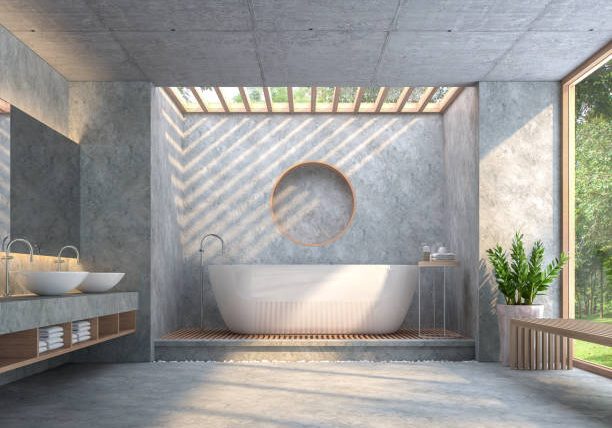
Bathrooms are basically a rainforest microclimate trapped inside your house. Steam, splashback, and constant humidity mean a standard wall finish will fail — bubbling, mould, the lot. Our bathroom rendering service uses moisture-resistant systems specifically built to handle that punishment while still looking sharp.
Swimming Pool Plastering and Rendering
Pool surrounds and interiors cop it even worse — constant water exposure, chlorine, UV, and the odd kid doing a bomb dive off the edge. Swimming pool rendering needs a genuinely waterproof, chemical-resistant system, applied with a smooth enough finish that it’s comfortable underfoot and doesn’t degrade after one Sydney summer of pool parties. This isn’t a spot for cutting corners — a poorly plastered pool shell means resurfacing within a couple of years, which costs a lot more than doing it properly the first time.
Commercial and Industrial Rendering: A Different Beast Entirely
Rendering a shopfront, a strata block, or an industrial facility isn’t the same job as rendering a freestanding house, and treating it that way is how projects blow out on time and budget. Commercial and industrial rendering brings scaffolding logistics, larger surface areas, tenant and pedestrian safety considerations, and — frankly — a much bigger reputational stake, because a scruffy façade on a business premises says something about the business behind it.
Whether it’s a retail strip, a warehouse, a school, or a strata apartment block, the fundamentals stay the same but the scale and coordination change dramatically. Our team handles commercial rendering across Sydney with exactly that in mind — minimal disruption, proper access planning, and a finish that holds up to years of foot traffic and weather without needing constant touch-ups.
The Actual Process (Because Everyone Skips This Part)
Here’s the bit most guides gloss over, and it’s the bit that matters most: preparation is where render jobs are won or lost. Industry-wide, the surface prep stage typically eats up close to half the total job time, and there’s a very good reason for that — render is only as good as what it’s sticking to.
A proper job looks something like this:
- Inspection — checking for structural cracks, drummy or hollow sections, existing paint condition, and moisture issues before a single bag of render gets mixed.
- Cleaning and repair — stripping loose material, patching damage, and dealing with any dodgy old coatings.
- Priming and keying — giving the render something proper to grip onto, especially over painted or smooth surfaces.
- Base coat application — the scratch coat, deliberately roughed up to anchor the next layer.
- Top coat and finish — the layer everyone actually sees, floated, sponged, or textured depending on the look you’re after.
- Curing and quality check — because rushing the drying process is a classic rookie mistake that shows up as cracking down the line.
Anyone offering to render your entire house in a day is either working with a tiny wall or skipping steps you’ll be paying to fix later.
How We Help: Why Sydney Property Owners Call Bill Cement Rendering
There’s no shortage of rendering contractors Sydney-wide, so what actually separates a good outcome from an expensive regret?
- Certified tradespeople, not backyard operators — every job is treated as a technical process, not a weekend project
- Premium, weather-tested materials suited to Sydney’s specific climate demands, from coastal salt exposure to inland heat
- Honest, tailored recommendations — we’ll tell you straight if cement, acrylic, granosite, or polystyrene is the right call for your wall, rather than pushing whatever’s easiest for us
- Genuine 7-day availability, because building schedules don’t stop for weekends
- A track record across residential homes, apartments, schools, sports facilities, and commercial premises — the full spectrum, not just one narrow niche
We reckon the best way to judge any local renderers Sydney has on offer is to look at their actual finished work, not just their sales pitch — so take a browse through our completed projects and see the results for yourself. If you’re after more practical tips, comparisons, and behind-the-scenes insight into what makes a render job last, our blog has plenty more where this came from.
Quick-Fire Questions Sydney Homeowners Actually Ask
How long does a typical render job take? Depends entirely on scale, but for an average freestanding home you’re generally looking at anywhere from a few days to a couple of weeks once prep, base coat, curing, and finish are all factored in. Anyone quoting a full house render in 24 hours is cutting a corner somewhere — usually the curing time, which is exactly where problems start.
Can you render over old paint? Sometimes, but only if that paint is stable and properly adhered. Simple tape tests — press strong tape onto the surface and pull it away sharply — will tell you a lot. If paint lifts easily, it needs mechanical preparation or removal before render goes anywhere near it. Skip this step and you’re basically gluing a new wall to a wobbly old one.
Is acrylic render actually better than cement render? Neither is “better” outright — they’re suited to different situations. Cement render is the tried-and-tested workhorse for standard brick and block. Acrylic render earns its keep on substrates that move or crack, coastal properties, and renovations chasing a faster turnaround with pre-coloured finishes. A decent contractor will look at your specific wall before recommending either.
Does rendering actually stop damp and water penetration? A correctly applied waterproof rendering system significantly reduces moisture ingress, yes — but it’s not a substitute for fixing the actual source of a damp problem, like faulty guttering or ground-level drainage. Render manages exposure; it doesn’t fix an existing leak.
What about older homes with heritage brickwork? These need extra care. Older mortar and masonry can be softer and more porous than modern materials, and using the wrong modern rigid render on a flexible old wall is a recipe for cracking. A proper assessment beforehand saves a world of pain.
How do I know if my current render is failing? Watch for hollow-sounding “drummy” patches when you tap the wall, visible cracking (especially wide or stepped cracks), bubbling or flaking sections, and persistent damp patches that reappear after rain. Any of those is a sign it’s worth getting a proper look before it gets worse — and more expensive.
The Bottom Line
Your walls are copping Sydney’s weather whether you look after them or not — the only question is whether they’re doing it protected or exposed. Whether you need a full exterior overhaul, a waterproof pool finish, a moisture-tough bathroom solution, or a commercial façade that won’t need touching up for a decade, the right rendering solution genuinely changes how your property performs and how it looks doing it.
Skip the guesswork and the “mate who’s handy with a trowel.” Get an honest, on-site assessment from a crew that renders walls for a living, not a hobby.
Get in touch with our team for a free quote, and let’s turn that tired brick into something you’re actually proud to pull up in front of.